
What public debate gets wrong about food poverty in the UK
Part 1

Food poverty has become one of the most talked‑about social issues in the UK. Food banks are regularly referenced in political debate, media coverage, and public campaigns. Yet despite this attention, much of the public conversation continues to misunderstand what food poverty is, why it exists, and what responses might actually address it.
Three problems come up again and again: media narratives, moralisation, and the simplification of policy. Words are also confusing - is it food poverty or food insecurity?
Media narratives: crisis without context
Media coverage of food poverty often relies on the language of crisis. Headlines focus on unprecedented demand, shocking statistics, and individual stories of hardship. While these accounts can generate sympathy, they frequently strip food poverty of its social and political context.
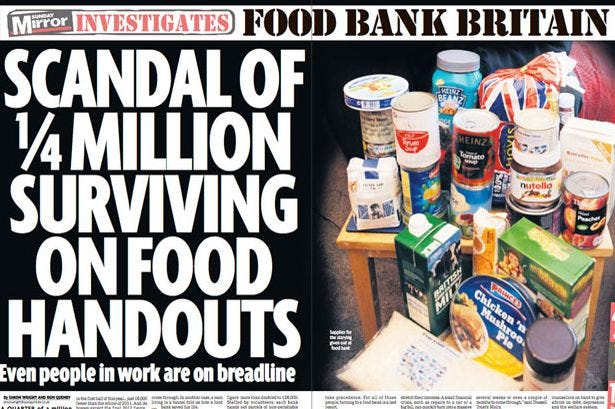
Food banks are presented as emergency responses to exceptional circumstances rather than as long‑term fixtures within the UK welfare landscape. The underlying causes, low wages, insecure work, rising housing costs, benefit delays and sanctions, are mentioned briefly, if at all.
This framing creates the impression that food poverty is sudden, accidental, or temporary, rather than structural. As a result, the solutions proposed are often charitable rather than political.
Moralisation: who deserves help?
Public debate about food poverty regularly slips into moral judgement. Questions about budgeting, cooking skills, and personal responsibility surface with remarkable consistency, especially when food poverty becomes politically uncomfortable.
These narratives individualise what are fundamentally structural problems. They suggest that hunger can be avoided through better choices rather than better wages, social security, or housing policy. In doing so, they obscure the lived realities of people navigating insecure work, fluctuating incomes, disability, caring responsibilities, or punitive welfare systems.
Moralisation also polices who is seen as a “deserving” recipient of help. Food poverty becomes something that must be justified, explained, or proven, rather than recognised as a predictable outcome of inequality.
Policy simplification: food banks as solutions
Perhaps the most damaging misconception is the idea that food banks are an adequate or appropriate response to food poverty.
In policy debates, food banks are often treated as evidence of community resilience or civic generosity. Their rapid expansion is framed as a success story rather than as a warning sign. This normalisation allows governments to step back from responsibility while celebrating voluntary action.
Food banks do not address the causes of food poverty. They manage its symptoms. Treating them as policy solutions shifts attention away from wages, social security design, housing costs, and labour market precarity, the areas where meaningful change would need to occur.
Why this matters
How we talk about food poverty shapes what we think is possible. When debate focuses on charity, behaviour, or crisis management, structural reform disappears from view. Food insecurity becomes something to be endured rather than prevented.
These misunderstandings are not accidental. They are politically convenient. And they matter deeply for how food poverty is taught, researched, and addressed.
In a paid follow‑up, I share how I actually discuss this topic with students, including the slides, readings, and case studies students find hardest but most transformative. That post includes teaching materials, reflections on student resistance, and uncomfortable questions that rarely surface in public debate.
If you have found this interesting, please support me to deliver more just like this. Please consider supporting my writing by subscribing, or simply sharing this on your social media. Paid subscribers get enhanced features, can join the subscriber chat forum and receive other benefits. If you want to take a break from this type of thing, you can also subscribe to my photography blog, Aber Bespoke Art, where I show how I produce the wonderful photos of my wonderful surroundings in North Wales.